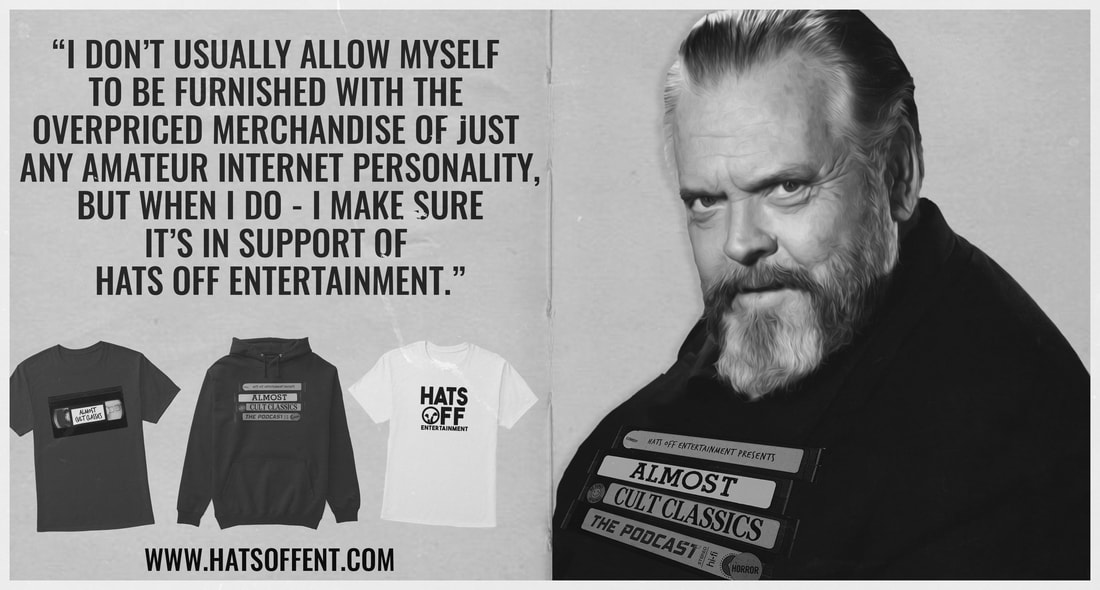
 After a few requests, the Hats Off t-shirt shop is now open! Support the channel & podcast by donning our apparel! Stay tuned for new designs as well.
2 Comments
Being that it's Halloween this month, I decided to make three videos in my Almost Cult Classics - each highlighting a different movie that contains horror elements. First up was Arachnophobia! I've always had a fondness for this fun creature feature from Frank Marshall. Great performances throughout, especially from John Goodman. PSA: Don't watch if you're even remotely afraid of spiders. Second up was Gene Wilder's Haunted Honeymoon! This was the fifth and final directorial effort by Wilder, starring he and his then wife Gilda Radner. It was a box office bomb, but I've always found it to be really inventive and original in its style. Lastly, I focused on a movie that's pure horror - The Changeling! It's a really eerie, slow building haunted house flick with a powerhouse performance from George C. Scott.
Last March, I released a video essay exploring the career of Shemp Howard of The Three Stooges. Being that a year has now somehow passed, I thought it only fitting to examine the career of another one of the Stooges. This time - Larry Fine. Like myself, a fellow Philadelphian and lover of TasteyLakes.
I am so overjoyed to finally present my recut of Laurel & Hardy's final film!
Prior to the launch of my YouTube channel, I had been working on a side project that involved Laurel & Hardy's final film - Atoll K (1951). The movie, which was a French-Italian co-production, never had its copyright filed in the United States - resulting in poorly duplicated copies to flood the home video & streaming market in the years that followed. The movie was plagued with production problems from the very start, compounded by communication issues between Stan & Ollie and the film's foreign speaking cast & crew. Despite their own declining health at the time, Laurel & Hardy worked tirelessly to better their scenes in the movie - reinventing some of their old gags and coming up with completely new ones as well. I have always found some of their scenes in this movie to be the best in their post-Hal Roach Studios career, even given their poor physical appearance. These great comedy scenes are often overshadowed by elongated subplots that don't involve their characters, with most of the foreign cast dubbed very poorly in English. To highlight this, I recut the film to more closely match their films at Hal Roach Studios. In cutting together this new edit, I used only the finest prints of the movie available, as well as a soundtrack composed by the Beau Hunks Orchestra. Back in November, I did a short documentary on the lost 3 hour version of Planes, Trains & Automobiles (1987). I used the shooting script, behind the scenes footage, and promotional material to paint a picture of the cut material that has never been seen publicly. The fan response was so great that I knew I had to do a similar doc on another John Hughes movie, as he was legendary for shooting hours of footage on his films. I then found out that the original cut of Uncle Buck (1989) was a whopping 4 hours long, and I just knew I had to find out more. Much like I did with my video on PT&A, I used the script & other promotional material to look back at the footage that had been cut from the theatrical film. Only this time, after posting the video, I was actually able to track down a missing 10 minutes from the rough cut of the movie. A viewer of my channel had access to a missing sequence of the film that was given to a member of the crew via VHS tape. It's clear that the scene came from an assembly cut of the film - an early version of the film that includes ALL footage shot, that is then trimmed and refined. Scenes in these cuts are typically way longer than they will in appear in the final cut, if they will appear at all. Case in point, the following scene: This scene looks like it would have taken place mid-film. It has Buck (John Candy) gambling with some buddies, all of whom appear to be local repairmen, using the children's games Buck has at his disposal. One of these buddies, "the guy in the red hat" as he's referred, is Chicago character actor Mike Hagerty. Another, "Coquero" (spell check) is played by Candy's longtime driver, Frankie Hernandez.
I did some very minor editing to the scene to improve the audio, but otherwise it's pretty much intact. As a result, the pacing of the scene is off compared to the rest of the film, as the content has not been refined at all. I can only assume that this scene would've ended up being cut to about 3 minutes if it had been left in the film. Still, it's a disservice to trim any John Candy performance, especially in a scene that has never been seen before. I'm so honored to present and share this sequence with fans of the movie. It's only confirmed my theory that more lost footage of this movie it out there; in basements, attics, and storage sheds of friends & family of crew members. If you think you might have access to or know someone whom has ANY deleted footage from this movie (or any John Candy movie), please contact me: [email protected]. 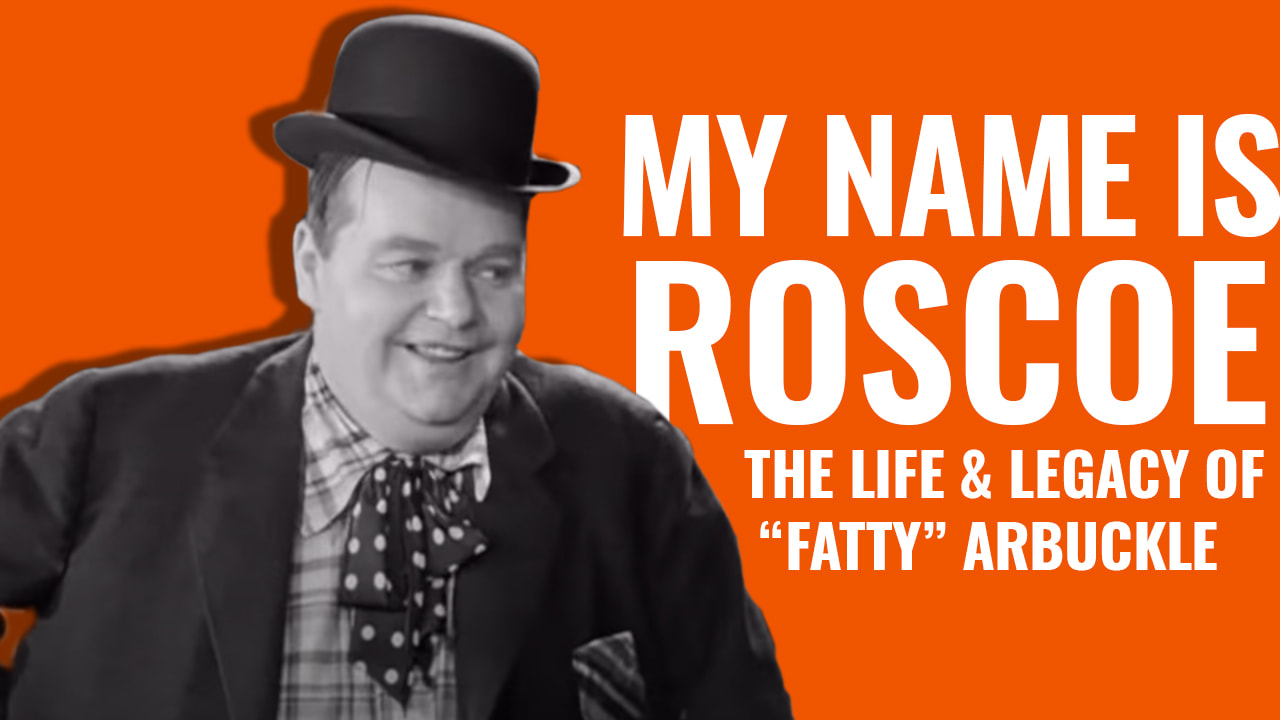
I have been a silent movie fan most of my life. I've always loved the films of Keaton, Chaplin, & Harold Lloyd. Whenever I had done research on them though, one name kept coming up consistently in all of their stories - Roscoe "Fatty" Arbuckle. Admittedly, I knew very few details about him. I knew, as his name lead on, that he was a rotund comic of the silent era, who was involved in a scandal that involved a young woman's death and something about a coke bottle. That was it. That alone kept me from researching his life or watching any of his films. His name would come up again during the research for my Chris Farley video. Farley, near the end of his life, had signed on to play Arbuckle in a biopic penned by David Mamet. It was also rumored that John Belushi and John Candy had also been attached to the role at some point. Farley, evidently, had greatly identified with Arbuckle's story and related to his "tortured clown" personality. When I pieced the Chris Farley video together I decided to include clips of Arbuckle during the segment where I discussed the project. And that would be my first time really watching the work of Roscoe Arbuckle. 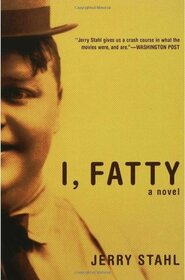
Shortly after, I became fascinated with his work. Almost every silent movie gag that I have laughed at or recreated in my own work seemed to originate with Arbuckle. I started going down YouTube wormholes, watching clips of him. I began buying up the rare DVD's of his work wherever I could find them. I also started reading books about his life. The catalyst in all of this was reading Jerry Stahl's "I, Fatty". This fictionalized biography, which was written as Arbuckle's lost memoir, is lovingly composed by Stahl, whom researched every aspect of Arbuckle's life to provide a deep, dark look into his soul. While parts of the book should be taken as fiction, most of the information presented is factual. Stahl paints a picture of a tormented clown, wanting nothing more than to make others laugh to hide his own pain.
Regardless of the facts and fabrications of the controversial scandal that ruined his career, Arbuckle's story was a heartbreaking one. I encourage anyone interested to do their own research on the scandal itself and form their own opinions. For me personally, it became clear, from reading any account of the scandal, that Arbuckle was slandered in the press in a way that dictated the public's perception of the case - something that is still in affect to this day. While I do believe that Arbuckle was innocent, it's also impossible to know certain details due to the media's constant mishandling of the case.
Whatever your thoughts on the topic may be, I really encourage you to look into the life and career of Roscoe Arbuckle. The stigma around his name today, just about 100 years since news of the scandal first broke, is unfair. He was a pioneer of the silent film industry and had friendships with the three biggest silent film comedians IN HISTORY. That alone is telling of his person and talent. Below is the video piece I put together to illustrate that point. I hope you enjoy it.
For those of you that have asked where you can find his films on DVD, here's a rundown of the best options:
The Round-Up - Restored Blu-Ray/DVD - CineMuseum As far as I know this is the only solo Arbuckle Blu-Ray available. A terrific restoration of one of his feature films. Please support these guys! They plan to restore more of his features and are the only ones willing to do so! Forgotten Films Collection - Amazon An out of print 2005 DVD collection for some of his starring shorts as well as ones he directed as William B. Goodrich. Worth the expensive price tag if you can find it for sale. Also check eBay! Buster Keaton Shorts Collection - Amazon This set is a MUST HAVE. Hidden away on this Buster Keaton Blu-Ray are 14 of the best Arbuckle & Keaton shorts. They look great, sound great and come with tons of bonus content.
My 'Planes, Trains & Automobiles' documentary short got some amazing news coverage. Here's some links to really great write-ups on my video and the #ReleaseTheHughesCut campaign:
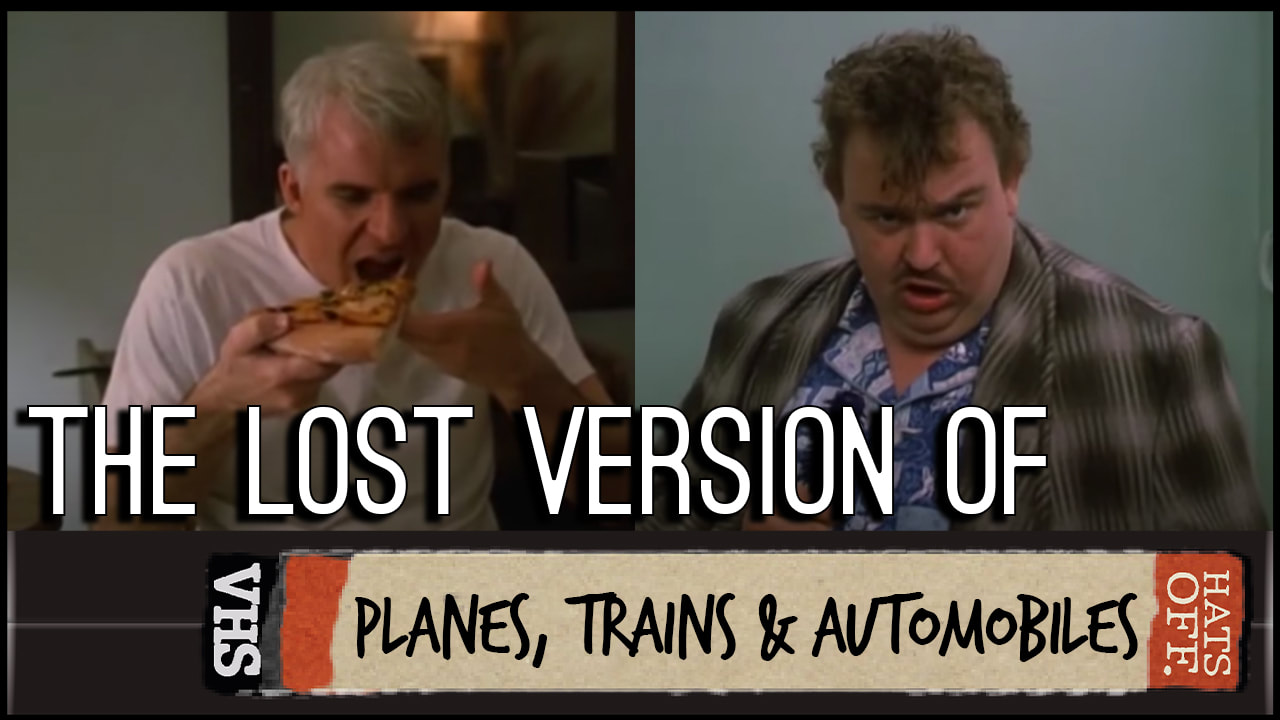
Unpacking the 3 hour cut of Planes, Trains & Automobiles - The A.V. Club
New Documentary Explores What Was Cut from Planes, Trains & Automobiles - Inside Hook Thanksgiving Classic Planes, Trains & Automobiles Leads Fan to Demand: Release the John Hughes Cut - ComicBook.com Planes, Trains & Automobiles Being Celebrated as the Ultimate Thanksgiving Movie - MovieWeb Release the 3 hour cut of Planes, Trains & Automobiles and We'll Be Thankful - The Dad Unpacking the 3 hour cut of Planes, Trains & Automobiles That Could've Been - Yahoo!
I'm so thankful for all of you who tweeted #ReleaseTheHughesCut and got this story trending & my video seen! The Inside Hook article in particular garnered the attention of Judd Apatow, Ben Stiller, Rob Brydon, Jake Trapper, and Steve Martin himself! Even if nothing else comes from this effort, I'm at least glad that it's put me in touch with so many fellow fans of this film. Thanks for all the support!
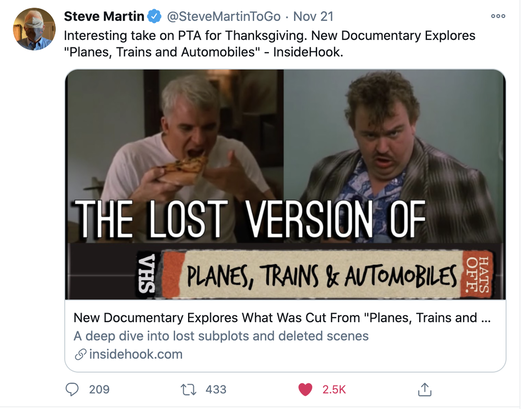
Is it too much if I get this framed?
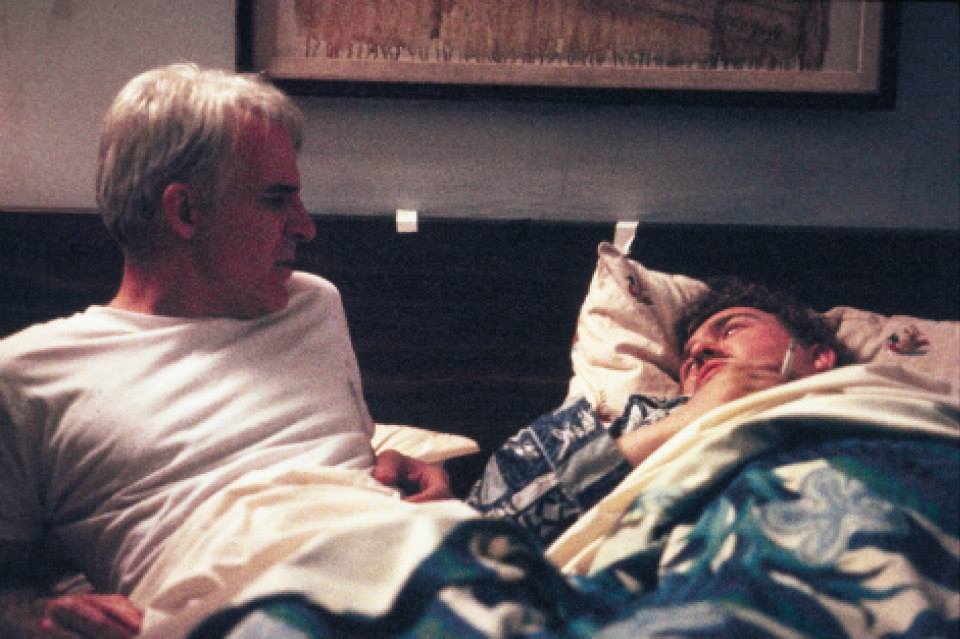
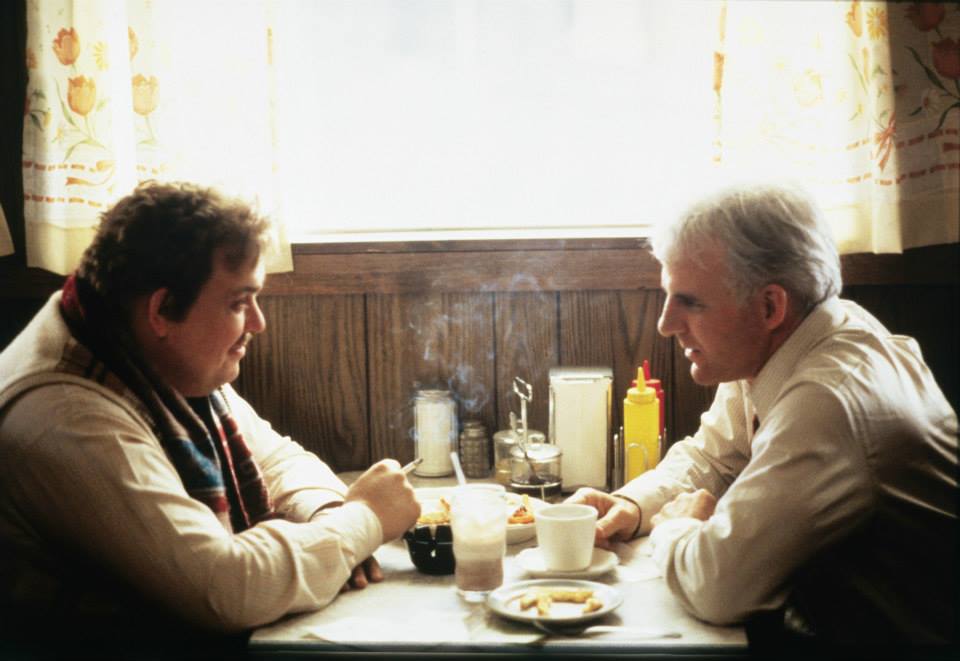
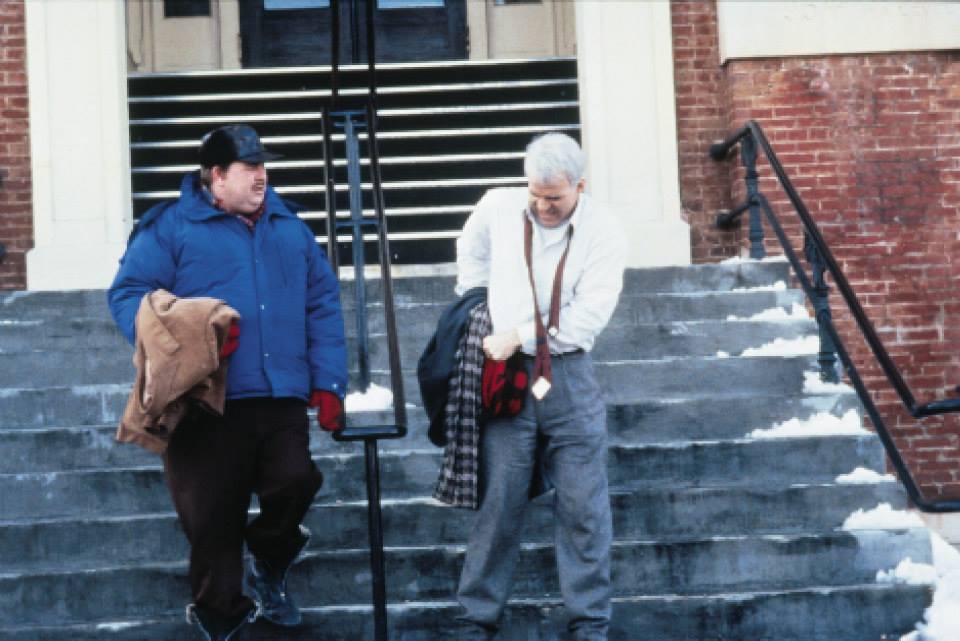
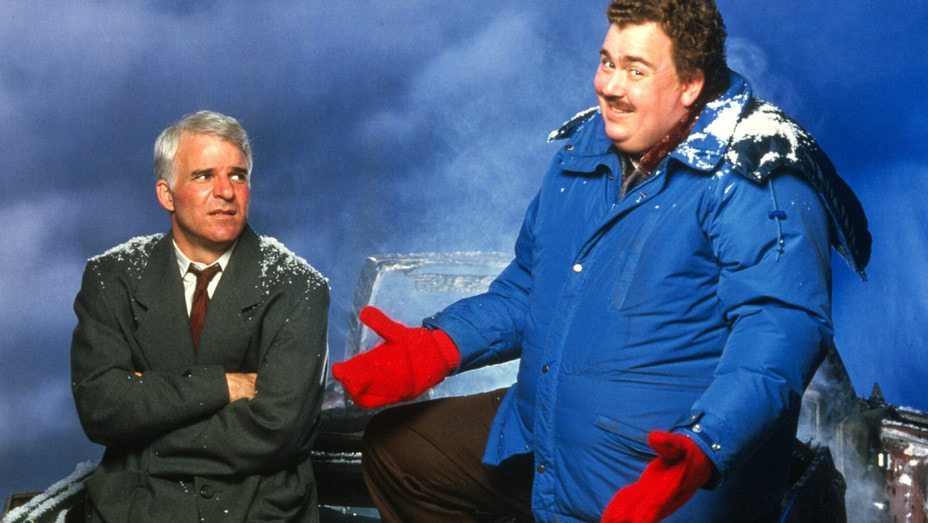 Several years ago, I was browsing the trivia section for Planes, Trains & Automobiles on IMDB.com when I came across an unconfirmed piece of trivia that alleged that an original cut of the film had clocked in at over three and a half hours. I was stunned. Could it be possible that there existed an additional two hours of footage of my favorite film? I set out to do some research. Over the years, I scoured numerous sources including; multiple versions of the script, interview pieces with cast and crew, theatrical trailers, promotional images, even first hand accounts of those who seemed to back up the claim: Yes, an extended cut of the film existed and it was probably sitting in a Paramount vault. Planes, Trains & Automobiles, released in 1987, was writer/director John Hughes' first attempt at making a more adult-oriented comedy, after his success in the teen film genre. Based on his own travel experiences, the script was allegedly written in under a week. Although Hughes originally did not plan to direct the film, he signed on once Steve Martin agreed to star in the project. Frequent Hughes collaborator John Candy was set to star opposite Martin. With a shooting script of 145 pages (nearly double the length of the industry standard for this type of comedy), the crew hit the road to film their road-trip comedy on location. Along the way, Hughes and the film's leads continued to improvise and add new sequences to an already elongated script. The result: a rough cut that came in at over 3 hours, 40 minutes long. Naturally, Hughes and the film's editor, Paul Hirsh then cut the film down to just over two hours. The studio, however, wanted more to be cut. So Hughes and Hirsch went into overtime and trimmed out everything that they possibly could to make the movie still make sense, before submitting a final cut that ran 1 hour and 33 minutes with credits. While the film has rightfully earned its status as a Thanksgiving classic, I always wondered what the missing material could possibly contain. Then, in 2016, I received a copy of the shooting script. Its pages were filled with not only incredibly funny gags and jokes, but also entire subplots and characters that are missing from the film. Additionally, a more flushed out ending revealed an even deeper side to Candy's Del Griffith, as well as a better understanding of Neal Page's relationship with his wife. From there I began to research exactly what was filmed and later cut from this amazing film. An early theatrical trailer (linked above) highlighted missing shots during the first motel sequence of the film. Additional promotional images also revealed several sequences scripted, but not present in the final cut: Images owned by Paramount Pictures. The only deleted scene to survive in full, features Del & Neal having dinner on their flight. This scene was used in cable edits of the movie for many years and was the only deleted scene present on the "Special Edition" Blu-Ray/DVD of the film: As I continued watching the film, sometimes multiple times a year, I began to notice all the remnants of the precise cuts made to secure a shorter runtime. It was only then that I realized just how fast the movie moves. Scenes rarely run longer than a few minutes, with little breathing room between location changes. While this ultimately does not affect the film negatively, it definitely made me yearn to see this longer cut, which allowed a little more breathing room between scenes. I decided to put my findings into a video short to highlight only some of what is missing. I wanted to create awareness around this lost cut in the hopes that the right parties can get involved and restore the missing material. Imagine my surprise when Steve Martin himself tweeted out a link to my video, giving some credit to my findings. So where do we go from here?
Do I expect a full HD transfer of the three and a half hour cut to come out of this? No. Even if it did survive intact, this cut likely would not be scored and edited in a way that is presentable to an audience. That being said, the two hour cut likely has survived and exists fully scored and edited in the way that it was screened for test audiences, and in the age of streaming, it could be restored and made available. So my proposal is this: Paramount, please restore and release any additional footage that is attainable. After 33 years, the fact that only a single deleted scene has been made available is just very disappointing. Please release some of this original cut. The footage doesn't even have to be edited with the completed film, us fans would just enjoy getting to see some of it, even out of context. If the project doesn't appeal to you, I humbly request to turn the original footage over to the teams at third party film restoration groups such as Criterion or Shout Factory. Lastly, for the fans of this film. Take to social media. Use the hashtag #ReleaseTheHughesCut to keep the conversation going and let the powers that be know we are interested in seeing John Hughes' original vision for this film realized. We're so fortunate that yet another news outlet is running a story on one of our documentaries. Check out this great piece from The A.V. Club on Leslie Nielsen: A Serious Talent.
"A new 20-minute documentary from Hats Off Entertainment on YouTube explores Nielsen unconventional career path and examines what makes his deadpan delivery so damn funny. Let’s all take a moment out of our day to appreciate this genius at work." |
|
 RSS Feed
Hats Off Entertainment, LLC.